Heritage Trip
1 Day
Price: $150

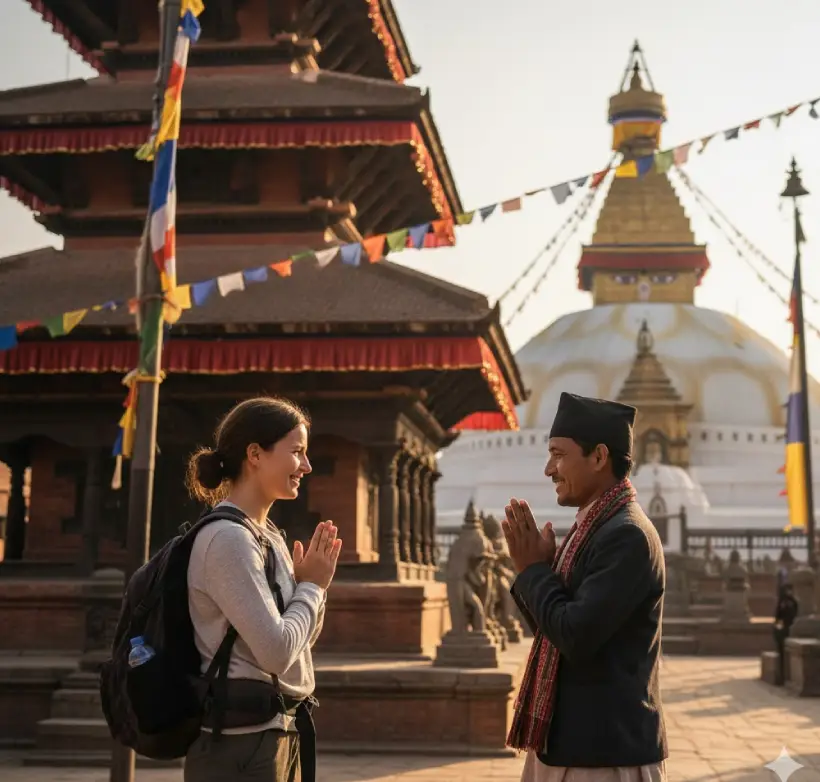
Nepal’s majestic mountains might draw you in, but its rich culture and warm-hearted people will capture your soul. To truly experience the magic of the Himalayas, it’s essential to respect and understand local customs. Beyond “Namaste,” here’s a guide to essential cultural etiquette that will enrich your journey and show genuine respect to the Nepali people.
1. The Power of “Namaste”
More than just a greeting, Namaste (or Namaskar for a more formal version) is a gesture of respect, meaning “I bow to the divine in you.” Press your palms together at your chest, fingers pointing upwards, and give a slight bow. It’s used for greetings, farewells, and thanks. Embrace it!
2. Dress Modestly, Especially in Sacred Places
Nepal is a conservative country. While hiking, practical gear is fine, but in towns, villages, temples, and monasteries, modest dress is appreciated. Women should avoid overly revealing clothing, and both men and women should ensure shoulders and knees are covered when visiting religious sites. Remove your shoes before entering temples or homes.
3. Eating and Drinking Etiquette
Use Your Right Hand: In Nepal, the left hand is traditionally considered unclean. Always use your right hand for eating, passing food, or giving/receiving items.
Don’t Share (Dhoot): Avoid offering food you’ve already bitten from, or a drink you’ve already sipped, as it’s considered dhoot (polluted).
Ask Before You Photograph: Especially with people. A smile and a gesture are usually enough, but asking “Photo?” shows respect. Be extra sensitive around religious ceremonies or personal moments.
4. Head, Feet, and Respectful Gestures
The Head is Sacred: Avoid touching someone’s head, even children’s, as it’s considered the most sacred part of the body.
Feet are Impure: Don’t point your feet at people, religious objects, or sacred shrines. If you accidentally touch someone with your foot, a quick apology (with a gesture of your hand to their chest, then your own) is customary. Step over, not on, people sitting on the floor.
Pass to the Left Around Stupas and Mani Walls: When circling stupas, monasteries, or mani walls (stone tablets inscribed with prayers), always walk in a clockwise direction.
5. Bargaining and Tipping
Bargaining: In local markets for souvenirs, a bit of friendly bargaining is expected and part of the experience. For essentials like food, transport, or fixed-price shops, prices are usually set.
Tipping: While not mandatory everywhere, tipping is appreciated for good service, especially guides, porters, and restaurant staff. A 10-15% tip in restaurants is common if a service charge isn’t already added.
6. Say “Thank You” with “Dhanyabad”
While Namaste serves many purposes, learning “Dhanyabad” (dhan-ya-baad) for “thank you” will always be appreciated. A few words in Nepali go a long way in creating connections.
Understanding and respecting these customs will not only make your trip smoother but also open doors to more genuine interactions and a deeper appreciation for Nepal’s profound culture. At Adventure Sports Nepal, we encourage responsible tourism and provide briefings on local customs to ensure your journey is as enriching for you as it is respectful to our hosts.
Copyright © 2026 All Rights Reserved. Developed By: Adventure Sports Nepal